Launching a Minimum Viable Product (MVP) is one of the most critical decisions a startup founder will make. But one of the earliest and most significant technical decisions is whether to build a web-based MVP (i.e., a web application or mobile‐responsive site) or a mobile-app MVP (i.e., a native or cross-platform mobile application). This is not just a matter of technology — it touches product strategy, target audience, business model, future scalability, cost, and speed to market.
Choosing between a Web MVP and a Mobile MVP is one of the most important early decisions a startup founder will face. It’s not just about technology — it’s about strategy, audience, and validation. Your MVP (Minimum Viable Product) is the foundation of your business idea, and the platform you choose determines how quickly you can reach users, gather feedback, and improve your product. A web MVP offers speed and accessibility, while a mobile MVP delivers engagement and native experiences. But the right choice depends on your target market, product goals, and resources. In this guide, we’ll explore how to make this critical decision with clarity — helping you choose the path that aligns best with your vision and startup growth journey.
What Is An MVP, And Why This Decision Matters
One of the first major challenges founders face when launching a startup is deciding how to bring their idea to life without wasting time or money. This is where the concept of a Minimum Viable Product (MVP) comes in — a smart way to test your idea in the real market with minimal resources. But just as important as what you build is where you build it — should your MVP live on the web or on mobile? The answer to this question can shape the future of your product, influencing everything from development cost to user adoption and long-term growth.
MVP: Minimum Viable Product
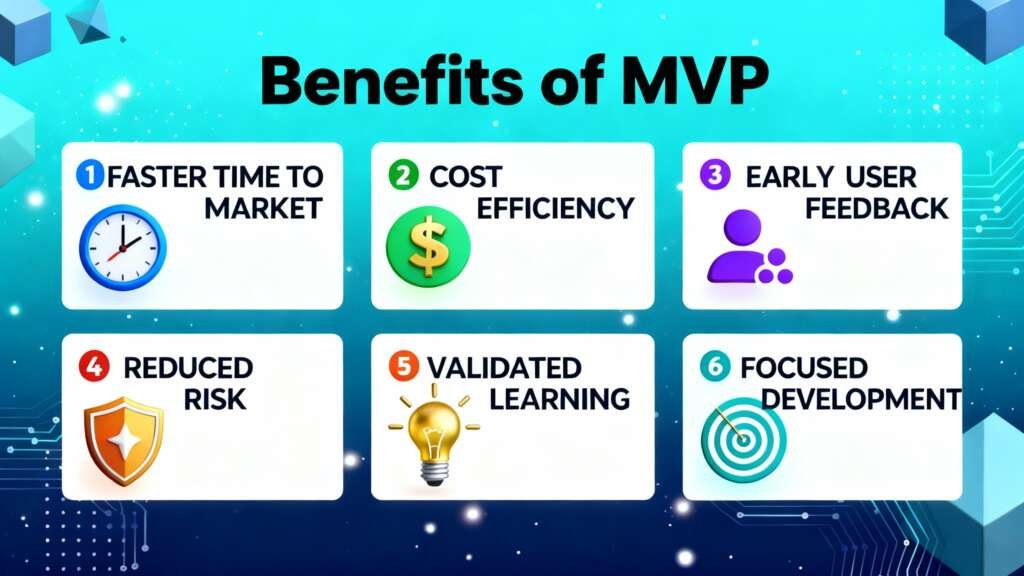
The term “Minimum Viable Product (MVP)” refers to a simplified version of a new product that includes only the core features necessary to validate the main idea with real users. The key goal is to collect maximum learning about customer needs and behaviors with the least possible effort, cost, and time.
In simpler words, an MVP allows startups to test their concept quickly without building the full product. Instead of spending months perfecting features that might not even matter to users, a startup launches a lean version focused on the most essential function that delivers value. Once users interact with it, the team gathers feedback, measures engagement, and decides whether to continue, improve, or pivot.
“The minimum viable product is that version of a new product which allows a team to collect the maximum amount of validated learning about customers with the least effort.” — Eric Ries
Launching an MVP also helps founders attract investors, as it demonstrates proof of concept and initial user interest. It shows that your idea isn’t just theoretical — it’s something people can use, react to, and pay for.
Why The Choice Of Web vs Mobile Matters
Once you’ve defined your MVP, the next big decision is choosing the right platform — whether to build it for the web or mobile. This isn’t a purely technical choice; it’s a strategic decision that influences how your product performs, how fast you can validate your idea, and how easily you can reach your audience.
Your platform choice will directly affect the time to market, cost, user experience, and scalability of your startup. Each of these factors plays a major role in determining whether your MVP succeeds or struggles to gain traction.
Time to Market
The time it takes to bring your MVP to market determines how quickly you can start learning from users. Generally, web MVPs are faster to develop and deploy because they don’t require app store approvals or platform-specific coding. You can launch a web app, share the link, and start testing immediately.
In contrast, mobile MVPs (especially native ones) often take longer due to the need for platform-specific development (iOS and Android) and the approval process required by app stores like Google Play or Apple’s App Store. If rapid testing and iteration are critical for your business, the web might be a faster route.
Cost and Resources
Your budget and technical resources will also guide this decision. A web MVP usually requires fewer resources because it can run on all browsers, reducing the need for separate teams or complex development environments.
However, a mobile MVP can be more costly, especially if you build native apps for both Android and iOS. That said, cross-platform frameworks like Flutter or React Native can reduce this cost by enabling you to build one app that works on multiple devices. Still, the web remains more cost-efficient for initial validation.
User Experience and Engagement
When it comes to user experience, mobile apps generally offer smoother, more immersive interactions. They can leverage native device features like push notifications, camera, GPS, or offline mode, creating a more personalized experience.
Web MVPs, on the other hand, have improved significantly thanks to Progressive Web Apps (PWAs) and responsive design, but they may still feel less “native” than mobile apps. If your MVP requires high engagement, frequent user interaction, or rich interface elements, a mobile app might be more effective.
Feature Set and Technical Constraints
Your product’s functionality will often determine your choice. If your MVP needs access to hardware features like a camera, accelerometer, GPS, or local file storage, a mobile MVP is the natural choice.
But if your idea primarily revolves around data input, content display, or simple online transactions, a web MVP is typically more than sufficient. It’s also easier to update and maintain since changes appear instantly without requiring users to download updates.
Web MVP vs Mobile MVP
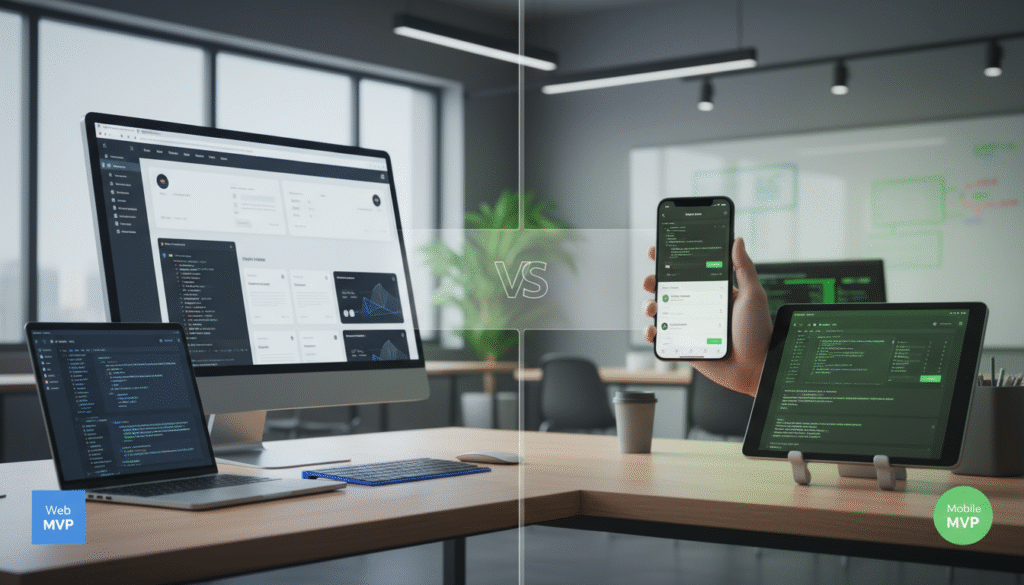
Web MVP (Web application or responsive website)
A Web MVP is a product you deliver via a web browser (desktop or mobile browser). It might be a fully responsive website, a web app (SPA), or potentially a Progressive Web App (PWA) that can behave like a mobile app.
Key features:
- No initial install required (users open it in browser).
- Works across platforms (desktop, mobiles, tablets) with one codebase.
- Typically faster and cheaper to build (especially simple features) when compared with native mobile.
- SEO / web discoverability can help you get organic traction.
- Updates are easier — you push changes to the server; users get instant updates.
- Often better for broad access and early user testing.
Mobile MVP (Native or Cross-Platform App)
A Mobile MVP is a product built for mobile devices (smartphones / tablets) and installed via the platform’s app store (or sideloaded). It may be built natively (iOS + Android) or using a cross-platform framework (e.g., React Native, Flutter).
Key features:
- Users install the app and it resides on the device.
- You can access native device features (camera, GPS, sensors, offline support, push notifications) more easily.
- Can deliver richer experience, higher performance, deeper engagement.
- But generally higher cost, more time (especially if building for multiple platforms), app store review/distribution hurdles.
Comparison Between Web MVP & Mobile MVP
Here is a high‐level comparison:
| Dimensions | Web MVP | Mobile MVP |
|---|---|---|
| Reach across devices | Very broad – any browser, any device | Narrower – devices that install the app |
| Time to build | Faster & often cheaper | Slower and more expensive (especially multi-platform) |
| Distribution / access | Via URL, shareable link, SEO, browser based | Via app stores + install friction |
| Updates & maintenance | Easier (single codebase, instant update) | More complex (app store updates, versions, etc.) |
| Native device features | Often limited (though PWAs may help) | Strong – camera, sensors, offline, push etc. |
| Engagement / retention | Potentially lower (less friction to abandon) | Potentially higher (installed, notifications) |
| Discoverability | Via search, link sharing | Via app store search/discovery and marketing |
| Monetization implications | Web monetization (ads, subscriptions, e-commerce) | In-app purchases, subscriptions, platform fees |
A Step-by-Step Decision Framework
Here’s a decision framework (in steps) you can use as a founder to choose between web vs mobile MVP.
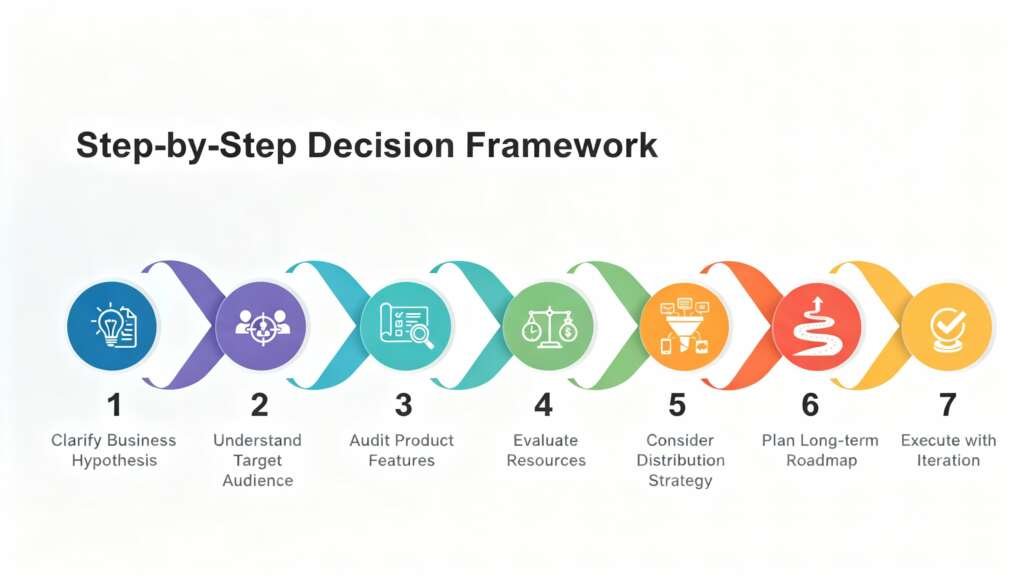
Step 1: Clarify your business hypothesis and value proposition
The first step is to clearly define the core problem your product is solving and identify the smallest set of features that will deliver real value to early adopters. Ask yourself: what is your main hypothesis about your users, their behavior, and potential monetization strategies?
For instance, if your target audience is busy working mothers, you might hypothesize that they would use your service on their phones while commuting to manage grocery orders.
On the other hand, if your audience is enterprise HR managers, you might predict they would use a desktop dashboard for payroll or employee management. Understanding your value proposition and business hypothesis upfront ensures that your MVP is designed to validate the right assumptions.
Step 2: Understand your target audience & usage patterns
Next, you need a deep understanding of your target users and how they interact with technology. Map out your primary user personas, considering factors like preferred device, context of use, technical comfort, geographical location, internet conditions, and willingness to install apps. If the majority of your users are likely to engage with your product on the go using smartphones, a mobile MVP may be the better choice.
Conversely, if your users are likely to access your product from desktops, or use a mix of devices, a web-based MVP could make more sense. Existing market research, user interviews, and analytics (if you already have pre-launch traffic) can provide valuable insights for this step.
Step 3: Audit required product features vs platform capabilities
Once you understand your users, examine the features your MVP needs to deliver and whether those features require specific platform capabilities.
For example, if your MVP relies on mobile sensors, offline functionality, or frequent push notifications for engagement, building a mobile MVP might be essential.
On the other hand, if your product primarily involves displaying data, managing workflows, sharing content, or enabling search functionality, a web MVP will likely suffice. This assessment helps align your product requirements with the platform that can best deliver the intended user experience.
Step 4: Evaluate cost, time to launch, resource constraints
Every startup operates within constraints, and evaluating the cost, timeline, and available resources is critical. Estimate how long and how much it would take to build a web MVP versus a mobile MVP, considering your team’s skills, budget, and maintenance needs.
A web MVP is often faster and cheaper to develop, making it ideal for early-stage validation when you need to test quickly with limited resources. If you have more funding, sufficient development expertise, and the goal is to achieve strong user engagement or lock-in, a mobile MVP could justify the higher cost and longer development timeline.
Step 5: Consider distribution, acquisition and engagement strategy
Your MVP’s success depends not only on how it’s built but also on how users find and interact with it. Think about your distribution channels: will users discover your product through web search, referral links, social media, or app stores?
What will be the cost of acquiring users, and how much friction exists in the installation or onboarding process? Mobile apps can drive frequent usage through push notifications and network effects, but they also require users to install the app, which can create a barrier.
Additionally, consider how your business model fits the platform: will you monetize through app stores or via web channels? Understanding acquisition and engagement strategies ensures your MVP reaches users efficiently.
Step 6: Think about long-term roadmap and scalability
Consider your product’s future growth and platform strategy. Do you plan to eventually support both web and mobile, and if so, which should come first? Are there future features that demand mobile, or can they wait until after initial validation? It’s also important to ensure that your MVP doesn’t lock you into a specific technology path, but instead allows flexibility to pivot or scale later.
For example, some startups launch as a responsive web app to validate the market quickly, then build mobile apps once product-market fit is confirmed. Others may prioritize mobile first if user behavior strongly favors on-the-go usage.
Step 7: Decide and execute with iteration in mind
Finally, based on all the prior steps, make an informed decision about which platform to build first. Focus on creating the minimal feature set necessary to validate your core hypothesis and launch quickly.
Once live, gather quantitative and qualitative data to measure user acquisition, engagement, retention, conversion, and churn. Use these insights to iterate, improve, and pivot if needed. Keeping your metrics platform-agnostic allows you to compare performance across web and mobile later, giving you the flexibility to expand or transition between platforms as your startup grows.
Pitfalls To Avoid
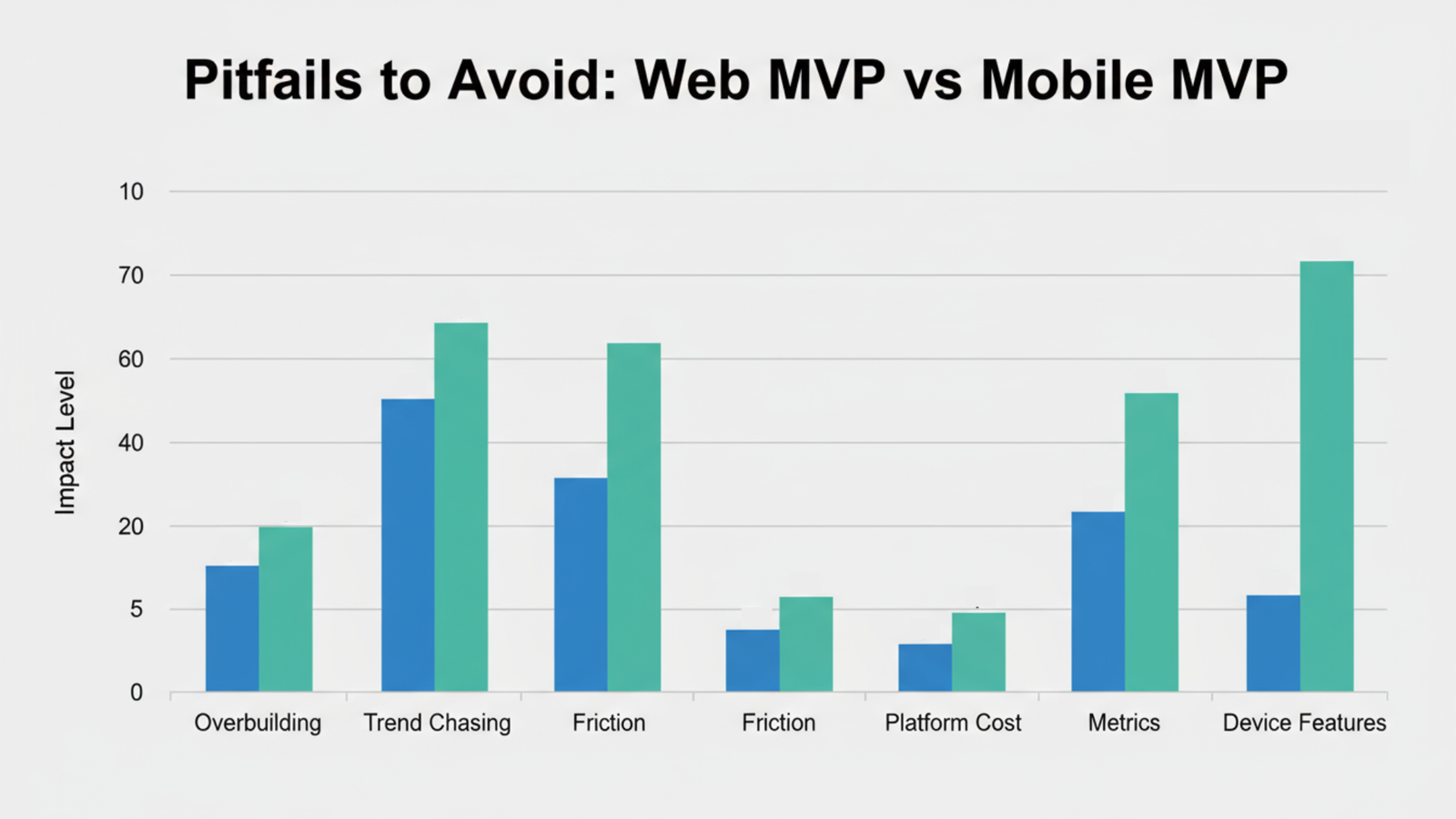
- Overbuilding for the MVP: Don’t treat the MVP like the final product. The platform decision can be complicated by too many features. Stick to core.
- Choosing mobile just because “mobile is trendy”: If your audience doesn’t need or use mobile primarily, you risk building big but validating little.
- Ignoring install/engagement friction: Even if mobile is chosen, the install/download step is a barrier. If onboarding is weak, users drop off.
- Under-estimating maintenance and platform cost: Native mobile apps require ongoing updates, platform version compatibility, store approvals.
- Failing to track metrics platform-agnostically: If you build mobile first, you need to ensure you can compare metrics to potential web release later (benchmarking).
- Ignoring long-term platform lock-in: If you build only mobile or only web, your architecture may prevent later expansion or pivot easily.
- Choosing web when you really need device features: If your value proposition truly depends on native features (e.g., AR, sensors, offline), a web MVP might under-deliver and provide poor validation.
Case Studies & Real-World Examples
Here are a few practical examples and insights from others’ experience that illustrate the decision.
- On Reddit, one founder of a second-hand clothes marketplace asked whether to build mobile app first or website. Many advised starting with a web app (mobile-friendly) because it is simpler and faster to build.
- In a question on Startups.com, an answer argued: “While everybody believes they have the next best idea… I feel build something that is accessible to a wider reach then once it’s proven its viability start rolling out the apps.”
- Blog article by Purrweb (2024/2025) outlines major differences: web apps have lower development cost, wider reach, no install; mobile apps have higher engagement, native features, but cost/time.
Example:
A startup identifies that their users are busy commuters who will use the service via smartphone while on the move. They need offline functionality and push notifications. They pick mobile MVP for iOS first (assuming their region is iOS-dominant), build core flow with a single feature (booking + payment), instrument all metrics, launch, validate, then expand to Android + Web later.
Alternative Example:
Another startup wants to test a B2B marketplace for freelancers working from desktops. They have limited budget and want to see demand first. They build a responsive web app MVP with a simple dashboard, instrument user flows, test conversion, then build mobile later if usage demands.
Final Thoughts
Choosing between a Web MVP and a Mobile MVP is one of the most important early technical decisions for a startup. There is no “one size fits all” answer, but a structured decision-making process will help you align with your business goals, user needs, budget and speed.
- If you’re uncertain, have limited budget/time, want broad reach — start with web.
- If you have a mobile-centric user base, need native features, and expect high engagement — start with mobile.
- In many cases, starting with web doesn’t preclude mobile later; and for many founders the fastest path to learning is via a responsive web MVP.
- Whichever you choose, keep your MVP lean. Focus on the core hypothesis, instrument metrics, listen to early users, iterate quickly.
By making an informed decision today about platform, you reduce risk, speed up your learning, and position your startup to pivot or scale in the right direction.